
You’ve invested in new technology to streamline operations, improve efficiency, and position your organization for growth. Leadership is excited. The vendor promises a smooth implementation. The demos looked great. But three weeks in, productivity has dropped, your team is frustrated, and you’re fielding complaints instead of compliments.
What’s going on?
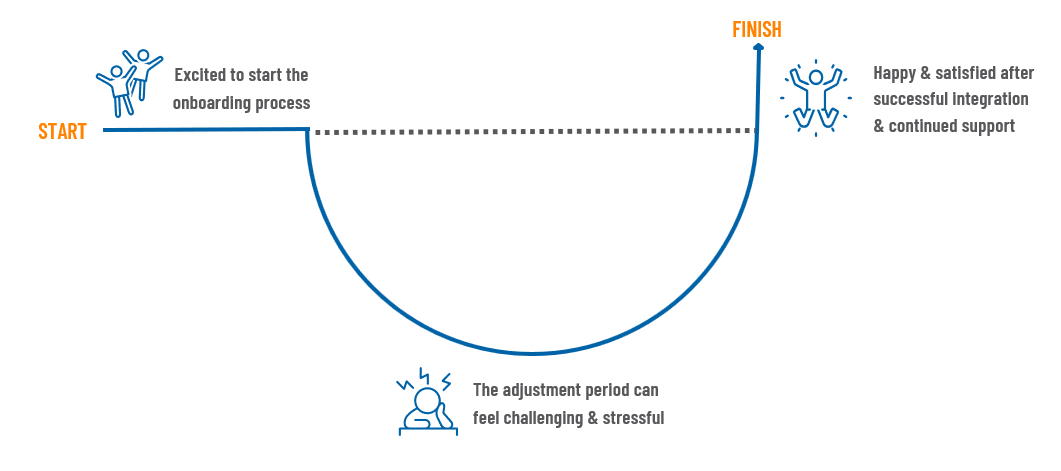
This is the J curve, the predictable performance dip that happens during organizational change before things get better. It’s not a sign that you made the wrong choice or that your team isn’t capable. It’s a natural part of the adoption process, and understanding it can mean the difference between a successful transformation and an abandoned initiative.
In this blog, we’ll explore what the J curve is, why technology changes hit harder than expected, and how you can guide your team through it successfully.
Understanding the J Curve: Why Performance Drops Before It Rises
Every significant organizational change follows a pattern. When you introduce new technology, processes, or systems, performance doesn’t immediately improve. Instead, it temporarily declines before rising again, creating a J-shaped curve on a graph.
The J curve unfolds in three distinct phases:
The Launch: Energy is high, early adopters are eager to try the new system, and enthusiasm is contagious. This phase feels promising, and it’s easy to believe the transition will be smooth.
The Dip: Reality sets in. Learning curves feel steep, familiar shortcuts no longer work, and productivity temporarily drops as people adjust. This is where frustration peaks and support requests multiply.
The Rise: New workflows become second nature. Teams start seeing the benefits, efficiency improves, and the system begins delivering on its promise. Confidence builds, and momentum returns.
The dip is a necessary adjustment period where people are learning, adapting, and recalibrating how they work. The challenge is that many organizations don’t plan for it. Leaders assume the transition will be quick, or they underestimate how disruptive change feels to employees managing daily responsibilities.
Without a plan to support teams through the dip, companies often abandon initiatives prematurely, wasting the investment and eroding trust in future changes. But when you anticipate the curve and provide the right support, the dip becomes manageable, and the benefits on the other side make it worthwhile.
Why Technology Changes Hit Harder Than Expected
It’s easy to assume that modern, user-friendly software should be simple to adopt. After all, the interfaces are cleaner than ever, the demos look seamless, and vendors promise minimal disruption. But in practice, technology changes hit harder than most leaders anticipate. Here’s why:
Complexity has shifted, not disappeared. Modern tools may have better interfaces, but they’ve introduced new layers of complexity through AI features, automation workflows, and integrations with other platforms. What used to be a technical challenge has become a procedural one, requiring employees to think differently about how they work rather than just memorize button sequences.
Multiple learning curves happen simultaneously. Employees are navigating technical changes (how to log in, where to find features), procedural shifts (how workflows change), cultural adjustments (how teams collaborate differently), and emotional responses (fear of being left behind or making mistakes). All of these layers compound the sense of overwhelm.
Tool fragmentation creates friction. Many organizations have adopted tools independently across departments, with no one owning the full picture of how systems connect. When one platform changes, it can create unexpected friction elsewhere. Teams that relied on workarounds or integrations may suddenly find themselves stuck, unable to complete familiar tasks.
“User-friendly” doesn’t mean universal. What feels intuitive to an IT professional may be confusing to someone in finance, operations, or customer service. People learn differently and at different speeds. A system that one team picks up quickly can leave another struggling for weeks.
These challenges aren’t insurmountable, but they require planning, support, and realistic expectations. Organizations that acknowledge the learning curve upfront and build systems to support it create smoother transitions and stronger outcomes.
Want to hear more about navigating the J curve in real life? Carlo Cacciatore, VP of Operations at TenisiTech, breaks this down beautifully in our conversation on the Tech Me Seriously! podcast.
Leading Through the Dip: What Works When Change Gets Hard
The dip is inevitable, but how your organization navigates it isn’t. Leaders who anticipate the challenges, communicate effectively, and provide the right support can turn a frustrating transition into a manageable one. Here’s what works:
- Project Management Excellence: Technology rollouts are change management initiatives. That means creating clear timelines with realistic milestones, dedicating resources specifically to the transition, defining ownership at every level, and building in checkpoints to pause, assess, and course-correct if needed.
- High-Touch Communication: Over-communicate the ‘why’ behind the change throughout the process, not just at launch. Acknowledge struggles openly and celebrate small wins publicly. Create safe spaces for feedback where employees can voice concerns without fear of judgment. Use multiple communication channels to ensure the message lands.
- Empathy for Different Experiences: Early adopters need different support than reluctant users. Remote teams may struggle more with limited in-person help. Some roles will be hit harder by workflow disruptions than others. Recognize these differences and tailor your approach accordingly.
- Flexibility Within Structure: Be willing to adjust based on feedback. If a particular workflow isn’t landing, revisit it. Recognize when a rollback or pause is strategic, not a failure. Rigidity during the dip often backfires, while thoughtful adaptation builds trust.
When leaders approach the dip with structure, transparency, and empathy, teams feel supported rather than abandoned. That support makes all the difference in whether the change ultimately succeeds or stalls.
Want more insights like this? Subscribe to the TenisiTech newsletter for monthly tips on managing IT change, strategic planning, and technology adoption without the overwhelm.
Communication That Actually Lands: Training and Support Strategies
All-hands announcements and one-time training sessions rarely work. People need multiple touchpoints, varied formats, and ongoing reinforcement to truly adopt new systems. Effective communication during a technology transition requires a multi-threaded approach that meets people where they are.
Multi-Threaded Learning
- Video demos for visual learners who benefit from seeing the process in action.
- Lunch-and-learns for team discussions and problem-solving.
- Quick reference guides for in-the-moment help.
- 1:1 coaching for personalized support.
- Champions programs where early adopters help colleagues navigate the transition.
Bite-Sized, Ongoing Training
- Short sessions over time beat marathon training days.
- Just-in-time learning delivered when people need it.
- Searchable, accessible resources that employees can reference.
Feedback Loops
- Regular pulse checks to gauge how teams are adjusting.
- Act on feedback visibly so employees know their input matters.
- Use struggles as teaching moments instead of treating them as failures.
The goal is to give people the support and tools they need to work through it confidently. When communication is ongoing, varied, and responsive, adoption accelerates and resistance decreases.
Finding Balance: Standardization Without Rigidity
One of the most common challenges in growing organizations is tool fragmentation. Different departments adopt their own solutions independently, creating a patchwork of platforms that don’t communicate with each other. Finance uses one project management tool, marketing uses another, and operations has yet another. Data is scattered, security gaps multiply, and IT teams are left supporting an ever-expanding list of disconnected systems.
Standardization solves many of these problems. It reduces costs by consolidating licenses, improves security and compliance by minimizing attack surfaces, enhances collaboration by ensuring everyone uses compatible tools, and makes training and support easier. When systems are standardized, onboarding is smoother, troubleshooting is faster, and teams can work together more effectively.
But standardization doesn’t mean rigidity. The key is finding balance. Involve teams in the selection process to build buy-in and ensure the tools meet real needs. Standardize core infrastructure, like communication platforms, file storage, and security tools, while allowing flexibility for specialized tools that address unique departmental requirements. Create clear criteria for exceptions so teams know when and how to request something outside the standard stack.
When done thoughtfully, standardization reduces chaos without stifling innovation or forcing teams into tools that don’t work for them.
Leadership Buy-In: The Make-or-Break Factor in Technology Adoption
Technology initiatives without executive support rarely survive the dip. When leadership isn’t visibly invested, employees notice. If executives aren’t using the new systems, skipping training, or treating the change as optional, teams will do the same.
For a technology change to succeed, leadership must actively champion the initiative by connecting it to outcomes that matter: improved customer experience, competitive advantage, or team empowerment. They should share the long-term vision, not just acknowledge short-term disruption. And critically, they must be honest about the dip and what success looks like on the other side.
Leadership behaviors that build trust during the transition include participating in training alongside teams, publicly acknowledging mistakes or challenges, celebrating progress openly, and staying visible and accessible. When executives model the behavior they expect, they create an environment where change feels achievable.
Phased Rollouts: Testing Before You Scale
Some organizations prefer the ‘rip off the band-aid’ approach, rolling out new technology to everyone at once. The thinking is that a fast, decisive change minimizes disruption. But in practice, this approach often backfires. It overwhelms teams, leaves no room to learn from early mistakes, and increases the risk of widespread failure if something goes wrong.
Phased rollouts offer a smarter alternative. By starting with a smaller pilot group, you can test the system in a real-world environment, gather feedback, identify pain points, and make adjustments before expanding to the full organization. This approach builds internal champions, gives you time to refine training materials, and reduces the chance of failures.
When structuring a pilot, choose a representative group, not just early adopters who are naturally tech-savvy. Include people who reflect different roles, work styles, and levels of comfort with technology. Set clear success metrics upfront so you know what you’re evaluating. Build in time to iterate based on feedback, and document lessons learned so the wider rollout benefits from the pilot’s insights.
Phased rollouts take longer upfront, but they save time and frustration on the back end by ensuring the system works as intended before it reaches the entire organization.
The TenisiTech Difference: Guiding You Through the Entire J Curve
Most IT providers focus on implementation: getting the system live and handing over the keys. At TenisiTech, we know that’s only the beginning. We guide organizations through the entire J curve, from planning and rollout to training, optimization, and long-term adoption.
Our approach includes:
- Pre-implementation planning and readiness assessment to ensure your organization is prepared before the change begins.
- Stakeholder engagement and messaging support to build buy-in and communicate the ‘why’ effectively.
- Customized, multi-threaded training that meets people where they are and reinforces learning over time.
- Ongoing monitoring and adjustment to address issues quickly and keep momentum moving forward.
- Post-implementation optimization to ensure the system delivers on its promise and continues to improve.
The result? Faster competency, higher adoption rates, lower frustration, and stronger confidence in future changes. We help you build change resilience, so every technology transition gets easier.
From Dip to Growth: Making Technology Change a Competitive Advantage
Every meaningful change includes a dip. The question isn’t whether it will happen, it’s how you’ll lead through it. Organizations that plan for the J curve, communicate transparently, and support their teams through the transition emerge stronger, more resilient, and better positioned for growth.
Technology is only as good as your ability to help people use it. When you treat change as a people challenge, not just a technical one, you create lasting transformation that drives efficiency, collaboration, and competitive advantage.
At TenisiTech, we specialize in helping organizations navigate technology transitions successfully. Whether you’re rolling out new systems, migrating to the cloud, or modernizing legacy infrastructure, we’re here to guide you through every phase of the curve.
Ready to make your next technology change smoother, faster, and more successful? Schedule a free consultation with TenisiTech to discuss your upcoming changes and how we can help you lead through the J curve.